
Table of Contents
“You don’t get paid to speak. You get paid for the value your speaking creates.”
I started learning public speaking more than a decade ago. Back then, I wasn’t thinking about stages, fees, or keynote invitations. I was simply trying to become clearer, more confident, and more impactful with my ideas.
Over time, something shifted. I realised that public speaking, when done strategically, isn’t just a skill—it’s leverage. It builds authority. It attracts opportunities. It positions you as a thought leader in your industry.
Today, I’ve been invited — and paid — to speak at companies, institutions, and global conferences. The journey hasn’t been linear. But every step taught me how speaking, when aligned with expertise and positioning, becomes a serious growth channel.
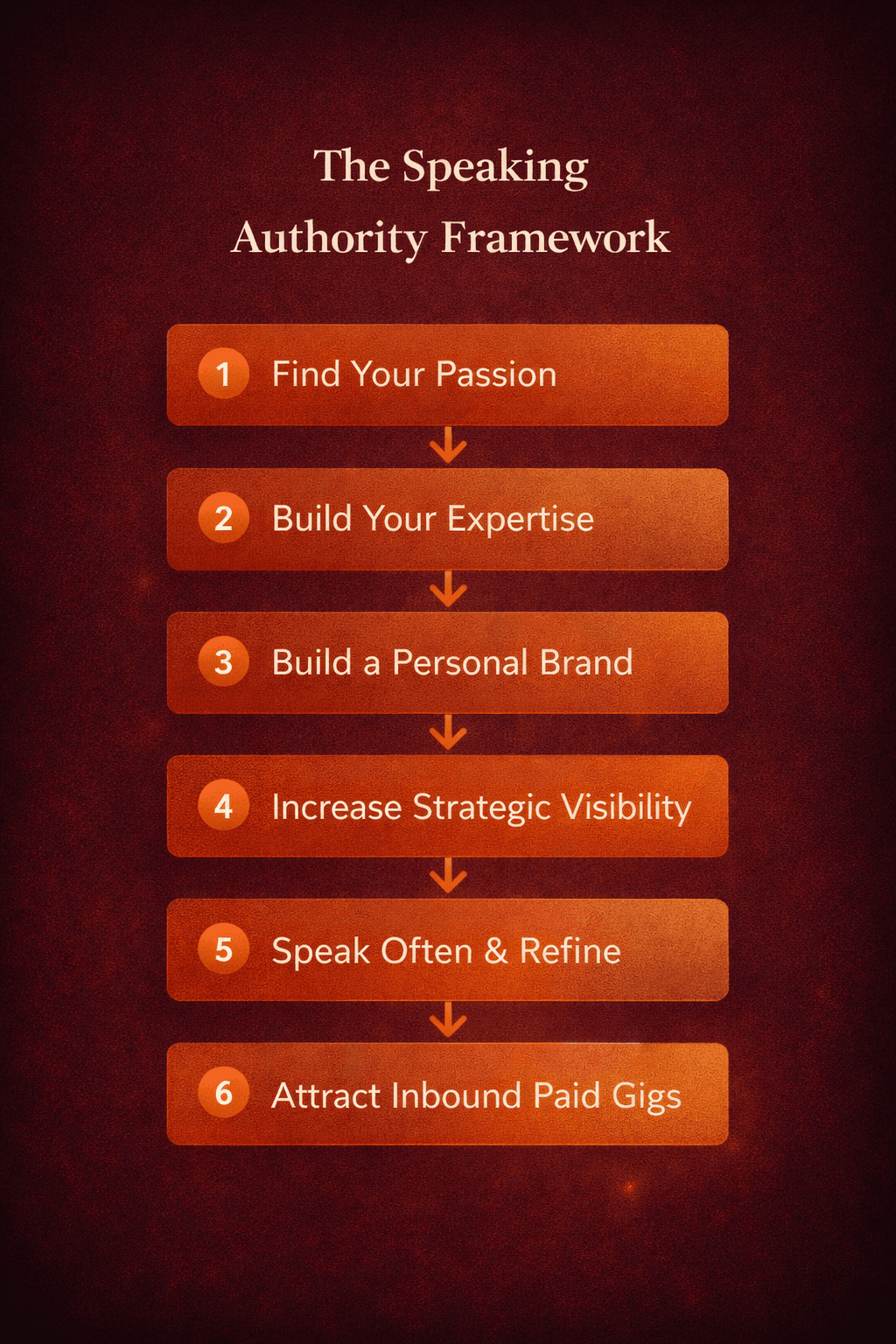
Whether you’re an early-stage founder, a growing CEO, or already speaking at events, here’s the real-world breakdown of the six steps I followed to turn my public speaking skills into both authority impact and income.
Step 1: Find Your Passion

As a founder or CEO, you don’t get invited to speak because you speak well — you get invited because you stand for something meaningful.
While skilled speakers can talk about almost anything, the most sought-after ones are deeply aligned with a specific topic. That passion becomes their identity on stage.
Ask yourself:
- What topic lights me up?
- What do I naturally talk about, teach, or research?
- Is it entrepreneurship, branding, growth, mindset, freelancing?
If you’re not speaking from passion, you’ll burn out long before you break through.
Step 2: Build Your Expertise

Passion may spark attention. But in the executive world, expertise is what sustains authority.
No one pays you to just be enthusiastic — they pay you because you know your stuff. Think of people like Jay Shetty (mindfulness), Gary Vaynerchuk (social media), or Simon Sinek (leadership). Their stage presence is impressive — but it’s their depth that gets them booked.
You don’t need to be a global name to start. But you do need real substance behind your message.
Step 3: Build a Personal Brand That Opens Doors

Even the most capable leader gets overlooked if their ideas aren’t visible beyond the boardroom.
Many people are invited to speak not just because they’re experts, but because they have influence. That could mean a strong presence on LinkedIn, a relevant podcast audience, or a reputation for delivering value in your industry.
The formula is simple:
- Do great work
- Share it consistently (especially on social media)
- Be known for something specific
This is your long game—and it pays off.
Step 4: Get More Visibility (Without Getting on Every Stage)

Many speaking opportunities don’t come from formal applications — they come from visibility in the right rooms
Visibility doesn’t require fame — it just requires presence. Here’s how you build it:
- Speak for free at clubs, meetups, or community events
- Post short speaking clips or insights on Instagram, LinkedIn, or YouTube
- Join speaking communities or Toastmasters-style clubs
More visibility = more inbound speaking requests = less chasing opportunities.
Step 5: Speak Often—Even When It’s Free

Leaders refine their voice the same way they build companies — through repetition and iteration.
Early on, I did dozens of free events. And honestly, I still do a few every year — not for exposure, but to test content, keep my speaking sharp, and stay connected.
Think of public speaking like going to the gym:
- Consistency matters
- Reps build strength
- Every session helps you grow
Even if you’re not getting paid yet, every talk brings you one step closer to the big ones.
Step 6: Let Paid Gigs Find You

This is where positioning starts working for you.
Once you have passion, expertise, visibility, and a personal brand, you’ll start attracting paid speaking gigs. Not always immediately, and not without effort—but it happens.
For most seasoned speakers, inbound leads become the norm — companies, conferences, and communities reach out directly.
If you show up with clarity, conviction, and consistency, opportunities will show up too.
Final Thoughts
I hope these steps gave you clarity on how public speaking can become a source of income—and impact.
Like any career, it takes time. But when you speak with purpose and serve with value, the results follow.
For founders and CEOs, speaking isn’t just about fees — it’s about influence, clarity of vision, and long-term positioning.
Ready to Turn Speaking Into Long-Term Influence?
If you’re a founder or CEO who wants to use public speaking as more than just a skill — if you want it to become leverage, authority, and long-term positioning — then this work requires depth.
Monetizing public speaking isn’t about chasing events. It’s about building clarity, confidence, structure, and presence that compounds over time.
That’s exactly what we work on inside Conquer the Stage (CTS) — my 90-day 1:1 transformation program designed for leaders who want to speak with conviction, own the room, and turn their voice into influence.
CTS isn’t about preparing one speech.
It’s about transforming how you show up in every speaking situation — boardrooms, conferences, investor pitches, town halls, and beyond.
If you’re serious about building speaking as a strategic asset, explore the Conquer the Stage (CTS) program.