
Table of Contents
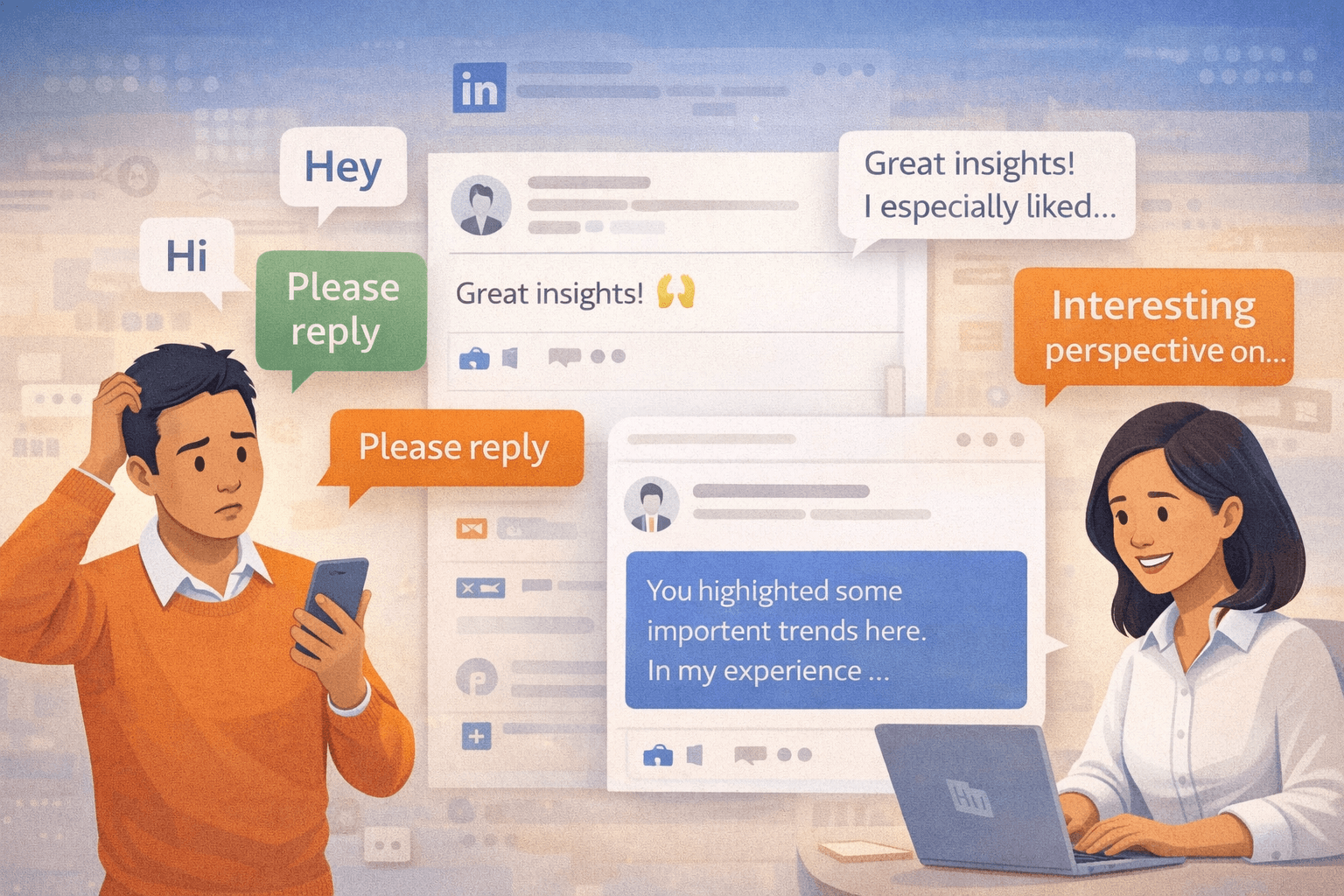
I’ve been active on LinkedIn since 2020. Over the years, I’ve written posts, commented consistently, replied to DMs, and had thousands of conversations on this platform. In 2023, I was recognised as a LinkedIn Top Voice, but that recognition didn’t come from hacks or virality. It came from paying close attention to how people communicate on LinkedIn.
And here’s what I’ve learned.
Most people don’t struggle on LinkedIn because they lack skills, experience, or knowledge. They struggle because of communication mistakes — in comments, in messages, and in the content they share (or avoid sharing).
I’ve seen countless LinkedIn messages that never get replies, comments that add no value, disagreements that hurt personal brands, and creators who post content but never engage back. These may seem like small things, but over time, they directly affect visibility, credibility, and trust on LinkedIn.
This blog is based on real patterns I’ve observed while engaging with professionals, founders, job seekers, and content creators. The five LinkedIn communication mistakes you’re about to read are common — but once you notice them, they’re surprisingly easy to fix.
If you’re using LinkedIn to build connections, grow your personal brand, or create professional opportunities, fixing these communication mistakes will take you further than any algorithm trick ever will.
Mistake 1: Purposeless Conversation starters
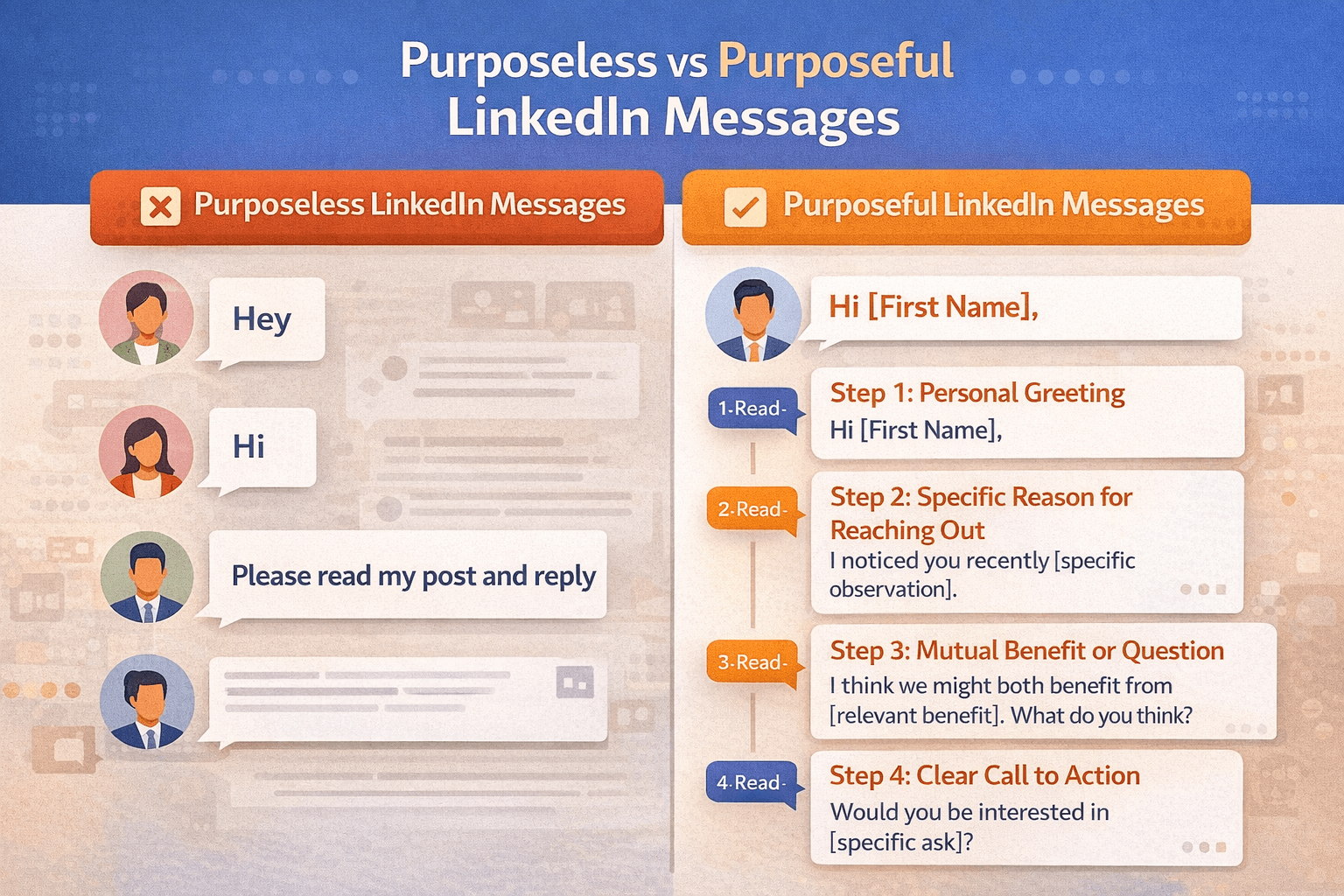
Purposeless conversation starters are one of the most common communication mistakes people make on LinkedIn, especially when reaching out to someone for the first time.
I’ve got hundreds of first-contact messages that looked like:
- Hey
- Hi
- Hi, what do you do?
- Hey, how are you?
- Hey, please reply
- Hello
If you use any of these to initiate a conversation, most often you won’t even get a response. This is not because there is something wrong with LinkedIn users, but because people get tons of messages on LinkedIn. If an average user like me gets hundreds of messages, imagine the number of messages powerful and influential people might be getting. In such an environment, the best strategy to engage someone new is to write messages with purpose, message that are to the point.
I use the following format to strike a conversation with a new person on LinkedIn. Feel free to add/remove/modify.
Hey <Name>,
I hope you are doing great/ Nice connecting with you / I really like your content (Anything polite)
<State the reason you are messaging>
<What do you expect from them>
<Closing> (All the best/Take care/Have a great day)
Regards,
<Signature>
Mistake 2: Valueless Comments That Don’t Build Connections
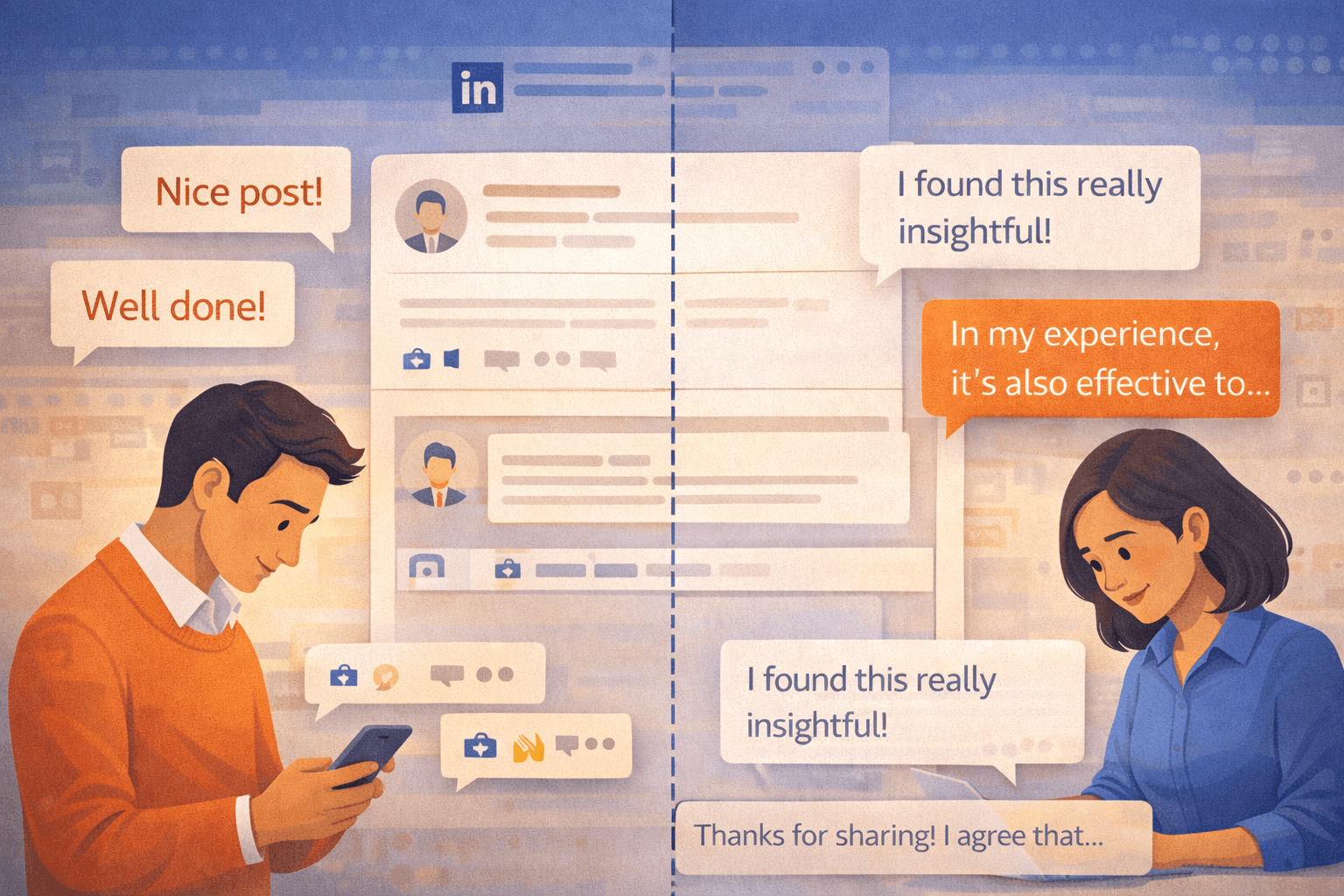
Valueless comments may seem harmless on LinkedIn, but they rarely help you start conversations, build relationships, or stand out in any meaningful way.
LinkedIn is filled with posts with comments like–
- Amazing
- Fantastic
- Thank you for sharing
- Good one
- Haha
- Very good post
Again, there is nothing wrong with such comments. They definitely make a difference to the creator who posted the content, but they don’t add any value to the person commenting them.
Comment section is a fantastic place to get new conversations started, to find like-minded people and to initiate a new connection. I often engage with people in their comment section before I send a connection request to them. This helps them recognize me instantly and increases the odds of getting my request accepted. All creators love their followers. They want to engage with them, talk to them and have them in their network.
So, how to post a comment that is valuable to you and well as the creator? I use a simple step-by-step strategy mentioned below. Please feel free to add/remove/modify.
- Read the post/Watch the video (Oh yes, this is important!)
- Understand the right context. It is very easy to get it wrong
- Relate the post to your life/work. What is your interpretation/ addition/ thoughts on the subject?
- Comment at least one sentence that makes sense. Don’t just write, “Well said”, “Good”, “Thank you for sharing” etc.
- Drop at least 25-30 comments in a week. The more you do, the better you get at it.
- Most important – Don’t be afraid to comment.
Mistake 3: Negative Comments
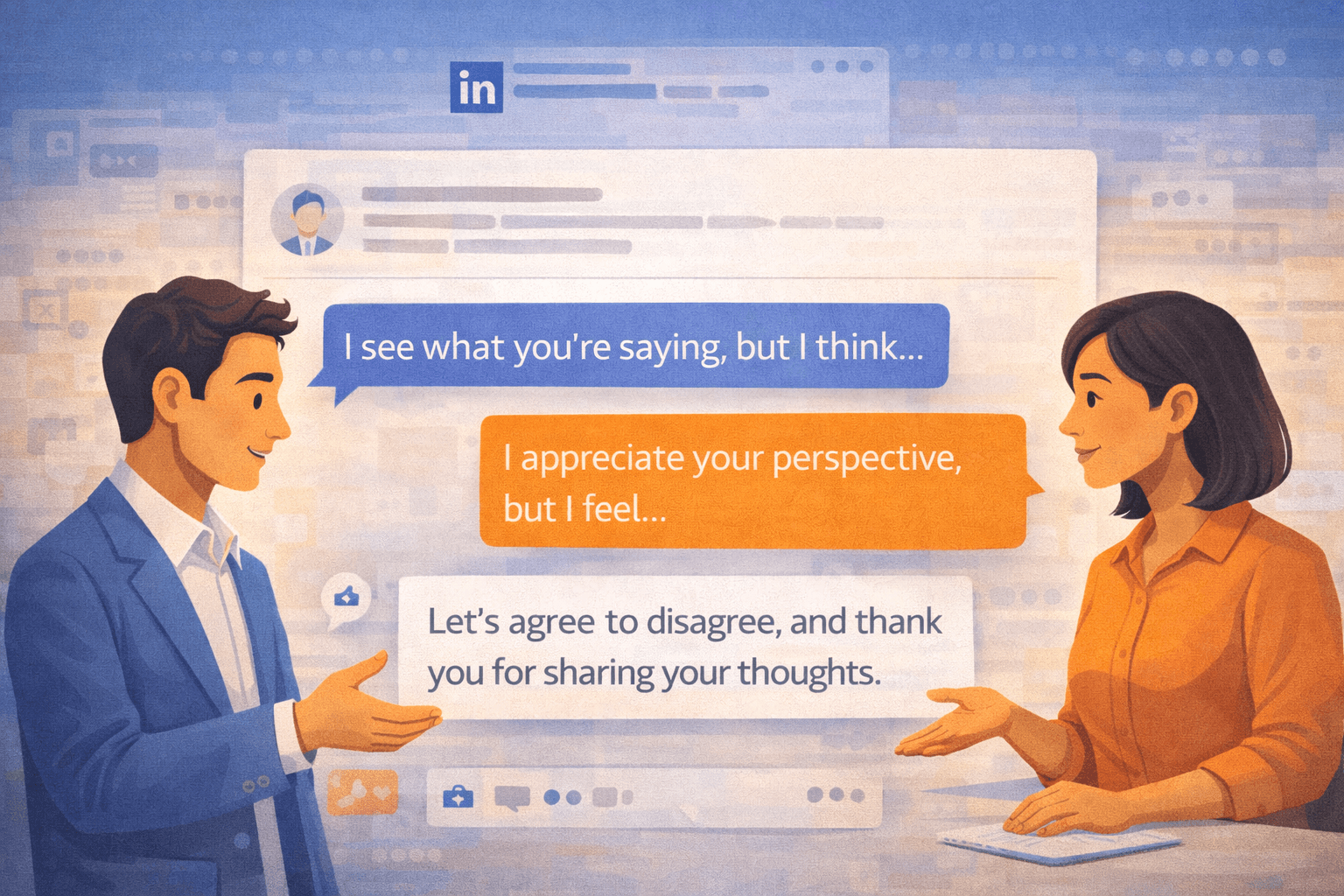
Negative comments on LinkedIn aren’t about disagreement — they’re about disrespect, and that difference matters more than most people realise.
Once you are on social media, everything you do is being watched, especially on LinkedIn.
LinkedIn is your new digital resume. You may not know it, you may not accept it, or may not acknowledge it, but everything you post/comment is being watched by someone. Over time, the way you communicate, show respect and disagree reflect your online personal brand.
So, how to disagree like a professional on LinkedIn? Here are my 5 steps:
- Read the post/Watch the video: There is nothing more foolish than dropping a disagreement comment without listening and understanding the whole story.
- Watch your intent: Do you really disagree with the idea, or is it vanity matrix? If someone disagrees just to look cool or get likes on their comment, then this is a high-risk, high reward game. It can backfire. (I’ve done all those mistakes!)
- Watch your words: Remember, anything can be said more politely.
- Avoid sarcasm: It is okay to disagree. It is NOT okay to disrespect!
- Be kind: Many of us make mistakes, even on social media. This experimentation tells us what’s right and wrong.
Personally, I avoid disagreements online unless it is very necessary. I choose to ignore, especially if the content creator is new. I would rather encourage someone than discourage them.
Mistake 4: Not responding to comments on your post
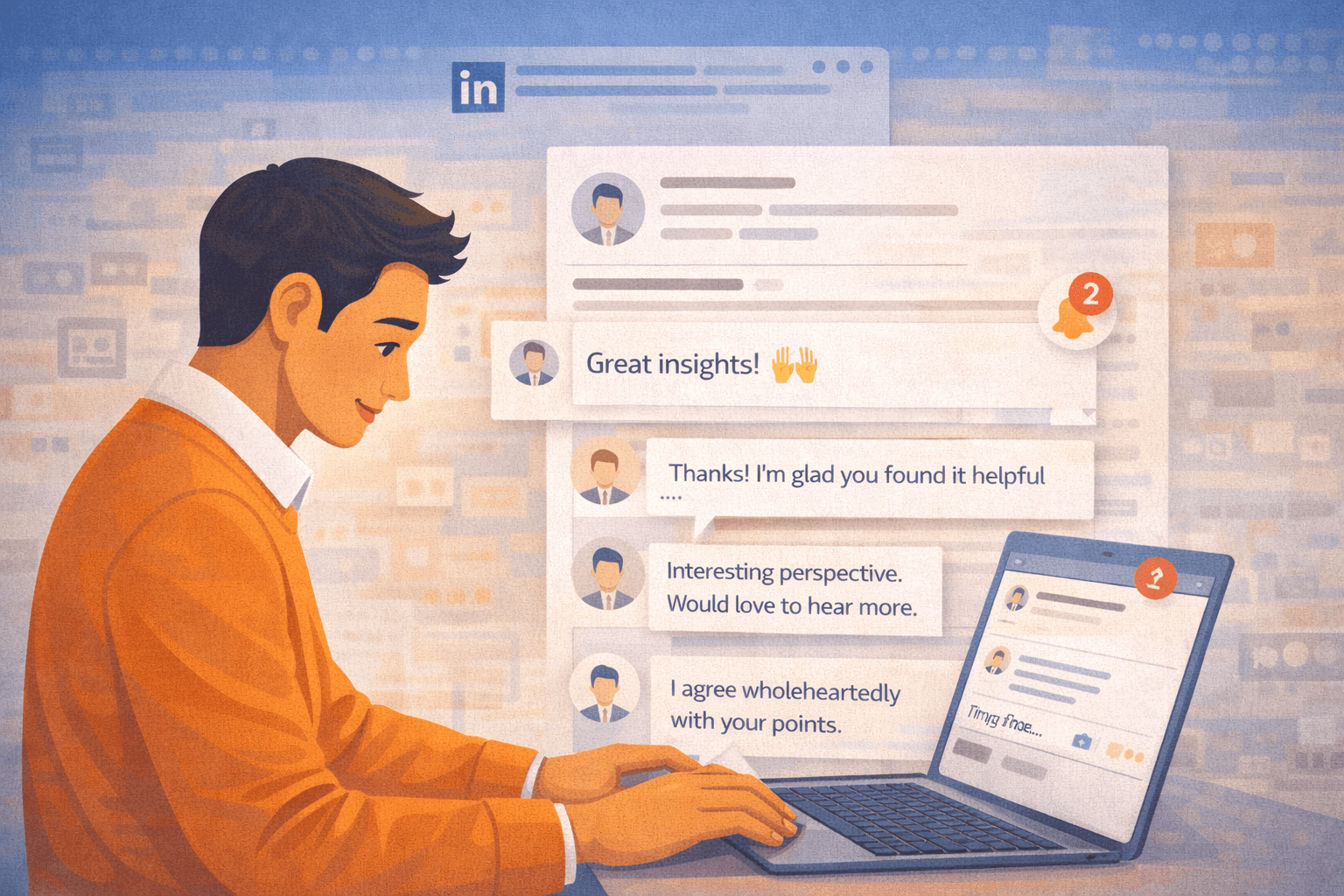
Not responding to comments on your LinkedIn posts is one of the easiest ways to quietly weaken engagement and relationships on the platform.
I try to respond to each and every single comment on my LinkedIn posts, even if it takes me hours to do so. Only exception to this are the viral posts where it becomes really difficult to respond to everyone. I try to react to comments in that case.
There are reasons why responding to comments on your posts is very important. Few of them are:
- It acknowledges the effort someone has made to write a comment. This makes them comment again on your posts in future.
- Responding to comments boosts engagement and increases your post’s reach.
- It shows that you care about your connections and followers
- Repeated engagement with certain people helps you build a good rapport with them. It leads to fruitful professional relationships.
- Responding to comments encourages others to comment that adds on to the overall engagement.
Mistake 5: Not sharing your knowledge/story through content
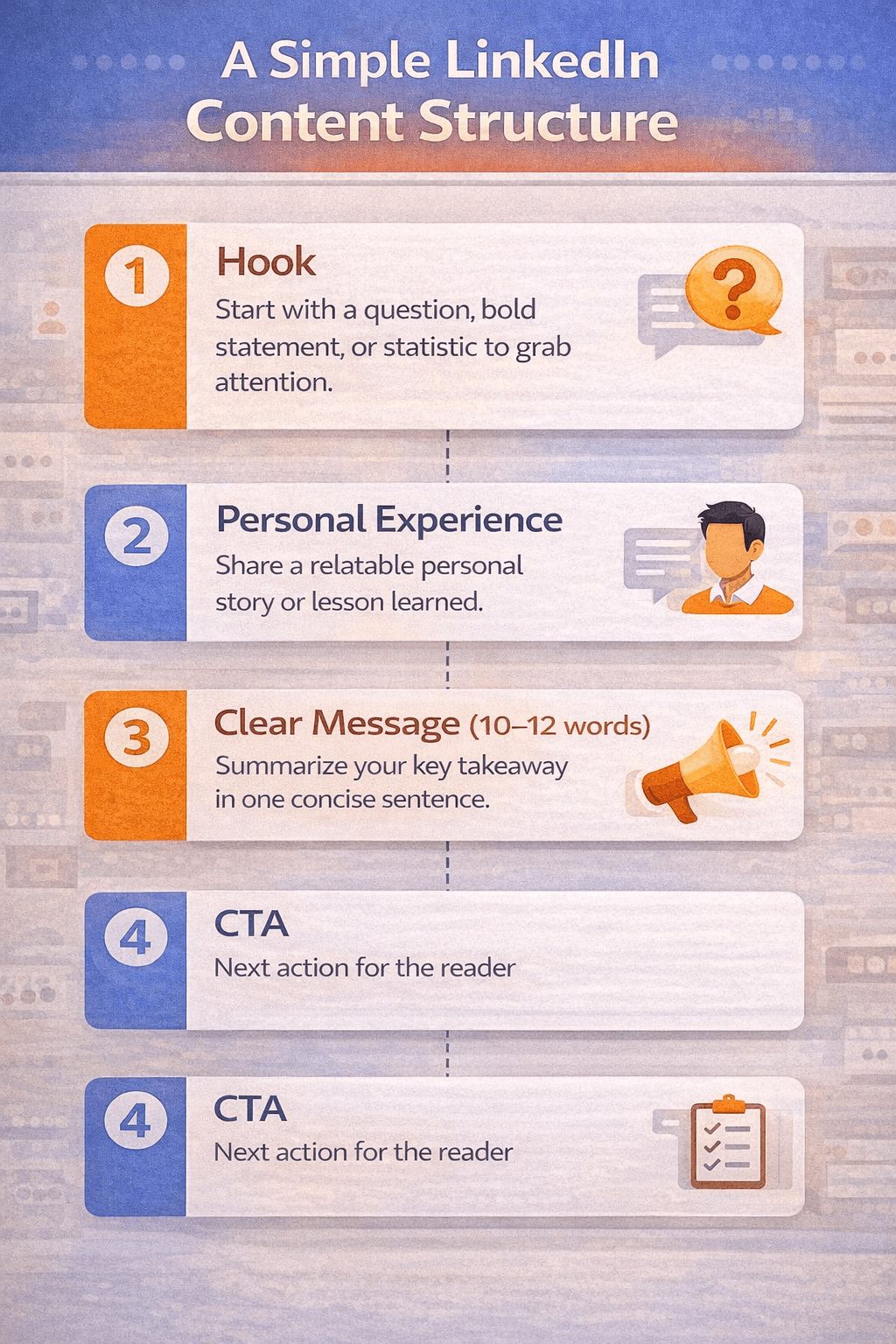
Not sharing your knowledge or personal experiences through content is one of the biggest missed opportunities for building a strong personal brand on LinkedIn.
I know content creation is not easy, but in a digital economy, businesses and people thrive online. Building a personal brand on LinkedIn is one of the finest ways to find job and business opportunities.
If you are a beginner, here is a simple structure to write a post on LinkedIn:
- Hook: Start with a controversial or challenging statement. Something that grabs attention and creates interest.
- An experience: Share a PERSONAL story! People like to know what happened with you and what you did about it. Not what Bill Gates, Steve Jobs or Mark Zuckerberg did.
- Message: Keep it crisp (10-12 words). Too much of message sounds like preaching.
- CTA : What do you want them to do after reading? Comment? Click on a link? DM ?
Communicate Intentionally. Show Up Authentically.
Communication on LinkedIn compounds over time.
Every message you send, every comment you write, and every post you engage with slowly shapes how people perceive you. Most people don’t damage their personal brand with one big mistake—they do it through small, repeated communication habits they never pause to reflect on.
The five mistakes in this article are common because they’re easy to overlook. But once you become aware of them, fixing them doesn’t require more time or effort — just more intention.
When you communicate with purpose, respect, and consistency, LinkedIn stops feeling noisy and transactional. It becomes what it’s meant to be: a place for meaningful conversations, genuine connections, and long-term opportunities.
If communication is something you’re actively working on, you may also find this guide on how to write a keynote speech that audiences remember useful.